Binance Considers Expanding Access to Global Stocks
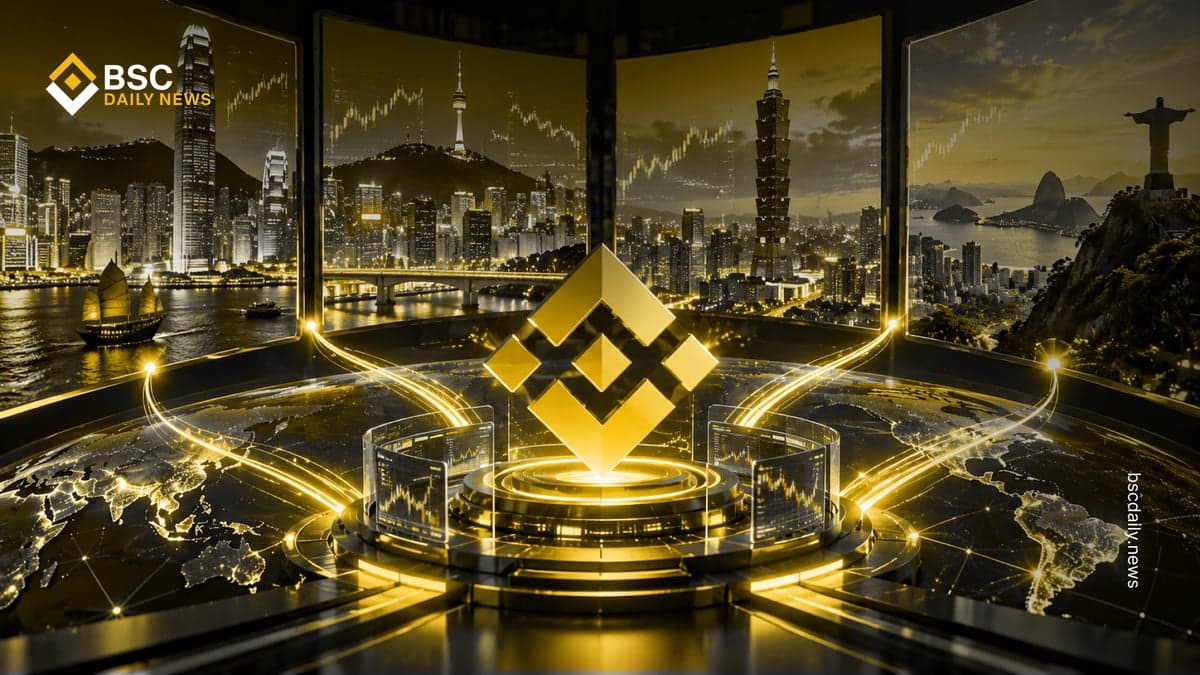
Binance is exploring ways to give users access to leading stocks in Hong Kong, South Korea, Taiwan and Brazil. The initiative reflects a broader effort to expand the exchange's offerings beyond digital assets and respond to demand for traditional financial markets.
Binance co-CEO Richard Teng outlined the plans in an October 15 post on X, saying users had requested access to major stocks in these markets. He wrote: “A lot of users tell us: ‘I want access to the top stocks in Hong Kong, Korea, Taiwan, Brazil…’ So we’re listening, and exploring how to expand stock access across more global markets.”
The proposal remains exploratory. The statement does not confirm launch dates, supported stocks, eligibility requirements or the form that the potential products would take. It signals that Binance is considering additional ways for customers to access traditional equities through its broader financial platform.
Tokenized Equities Expand Binance's Product Strategy
Binance has been expanding beyond conventional cryptocurrency spot trading through products and services aimed at a wider range of financial activities. Tokenized stocks are one part of this broader market trend, representing traditional financial assets through blockchain-based tokens.
In 2026, Binance introduced tokenized U.S. stock products, and the supplied announcement says the product's assets under management surpassed $1 billion within roughly four months. AUM measures the value of assets managed by a product; it is different from trading volume, which measures the value of transactions over a specified period.
BNB Chain has also promoted tokenized equities through its official bStocks announcement. Tokenized-stock arrangements can connect traditional securities exposure with blockchain infrastructure, although the rights attached to a token depend on its legal and product structure. Binance has not confirmed that its proposed expansion into Hong Kong, South Korea, Taiwan and Brazil will use the same model.
Why Binance Wants to Offer More Than Crypto
Teng has described diversification as a way to make Binance's business more resilient. Crypto exchanges generate activity from several sources, including trading fees and other financial products, so expanding into additional markets could broaden the range of services available through a single account.
The strategy also reflects a shift in competition among trading platforms. Coinbase has expanded its offerings beyond spot cryptocurrency trading, while OKX has explored tokenized equity trading through a partnership with Intercontinental Exchange, the parent company of the New York Stock Exchange. These developments illustrate how digital-asset platforms are exploring connections with traditional financial markets.
However, adding stock exposure involves different operational and regulatory requirements from listing cryptocurrencies. Access to equities can depend on local securities laws, licensing arrangements, market infrastructure and customer eligibility. Binance's exploration of additional markets does not, by itself, establish that these requirements have been met or that products will become available in each jurisdiction.
Tokenization and Access to International Markets
Tokenization could provide another route for connecting investors with financial assets, particularly where products can be accessed digitally and supported by appropriate infrastructure. Some blockchain-based products also seek to enable extended trading hours or easier transfers between compatible systems, though availability depends on the specific product and market.
The potential audience is large, but financial inclusion statistics need to be interpreted carefully. The World Bank's Global Findex 2025 findings state that approximately 1.3 billion adults worldwide still lack access to financial accounts. That figure highlights gaps in access to formal financial services; it does not directly measure access to stockbrokers or prove that tokenized equities would resolve those gaps.
For Binance, broader stock-market access could give eligible users another way to interact with financial markets through digital platforms. Whether it improves access in practice will depend on the products launched, applicable regulations, costs and the countries in which customers can use them.
Binance AI Pro Adds an Automation Layer
Binance is also developing AI-powered tools alongside its expansion into additional financial products. Its Binance AI Pro service is designed to help users analyze markets, execute trading strategies and manage positions through a dedicated virtual sub-account.
Binance's official AI Pro FAQ explains that the assistant supports spot, futures and margin trading, subject to regional availability and applicable rules. The platform's AI Pro launch announcement also describes its automated setup and integration with trading accounts.
These tools are separate from the proposed expansion into international stocks. The supplied material does not establish that AI Pro can trade the Hong Kong, South Korean, Taiwanese or Brazilian equities Binance is considering. Any future integration would need to be confirmed through official product announcements.
What Happens Next for Binance's Stock Plans?
The immediate question is whether Binance will turn its exploration into specific products. Details to watch include supported markets and securities, launch timelines, the structure of any tokenized or conventional stock offerings, and the regulatory arrangements governing access.
For now, Teng's statement establishes user demand and Binance's interest in expanding stock access, rather than a confirmed rollout. If the company proceeds, the move would add another dimension to competition between crypto exchanges and platforms offering a broader mix of financial services.
Binance's direction is clear: it is considering a wider range of markets and tools beyond cryptocurrency trading. The eventual impact will depend on which products reach customers, where they become available and how the exchange implements them.